

Clicking the following controls will change the main image displayed above.
LITTLE LIME SPOTLIGHT™
Panicle Hydrangea
Hydrangea paniculata
'SMNHPLLC'
PPAF; CBRAF
- Strong Stems
- Healthy Foliage
- Abundant Bloom
- Description
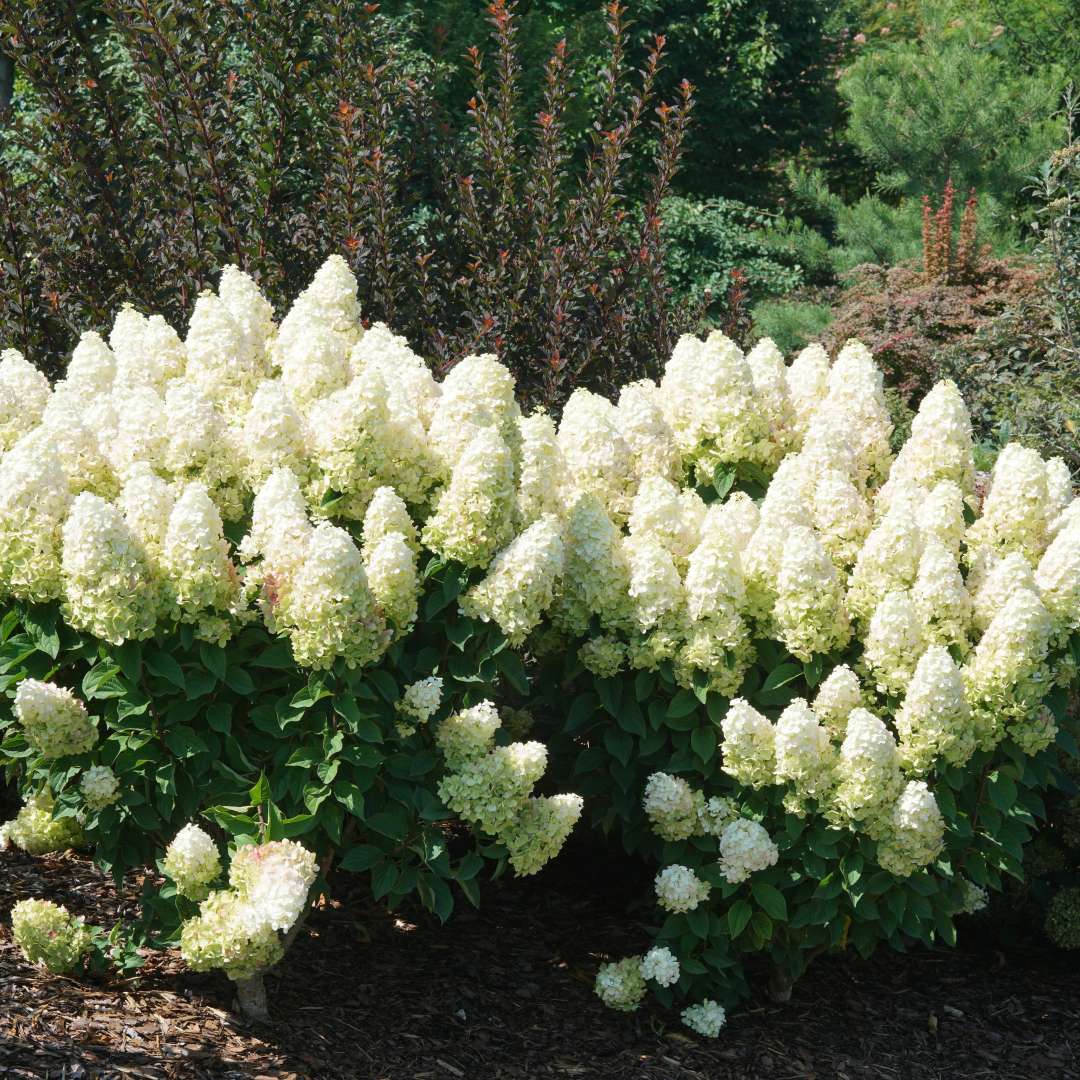
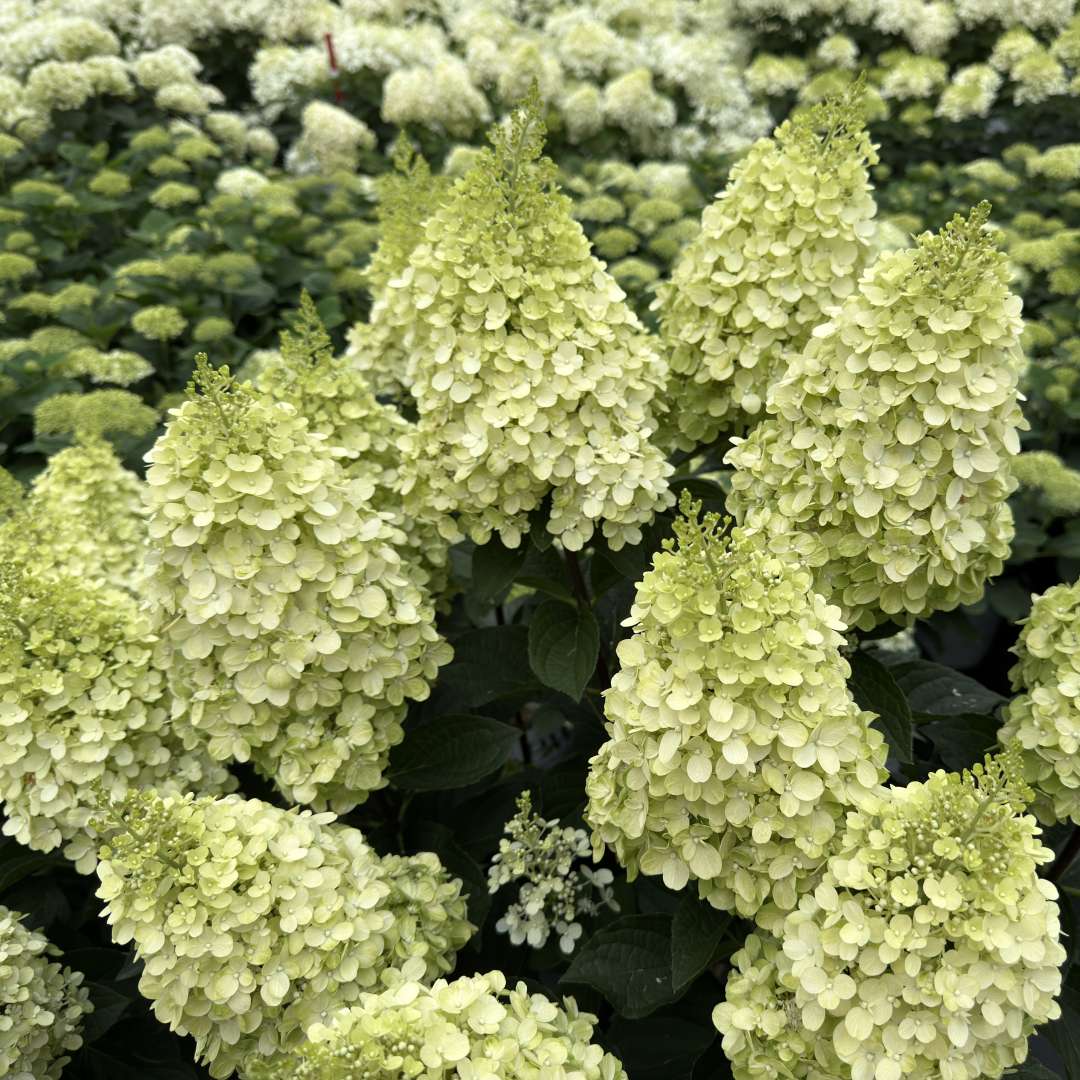
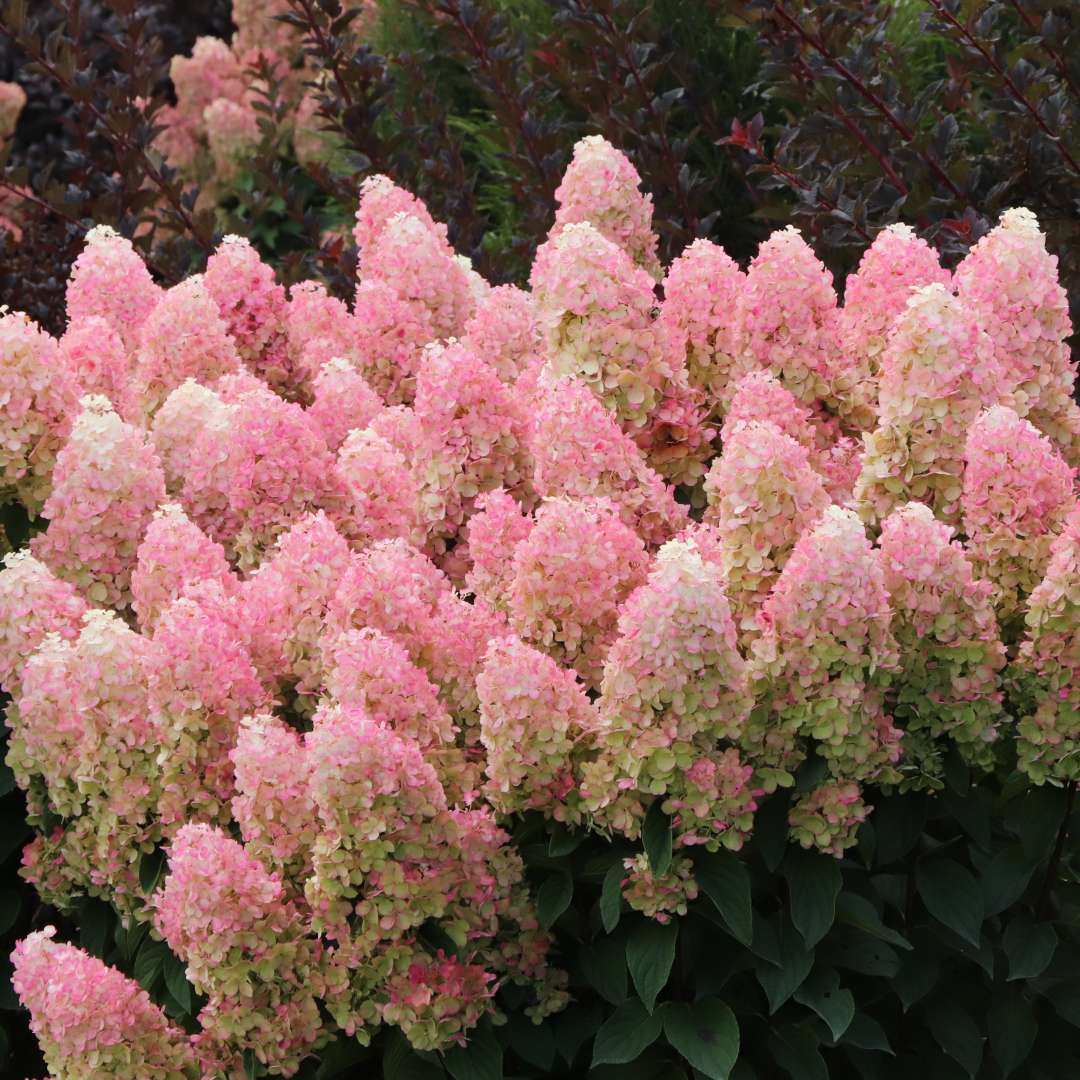
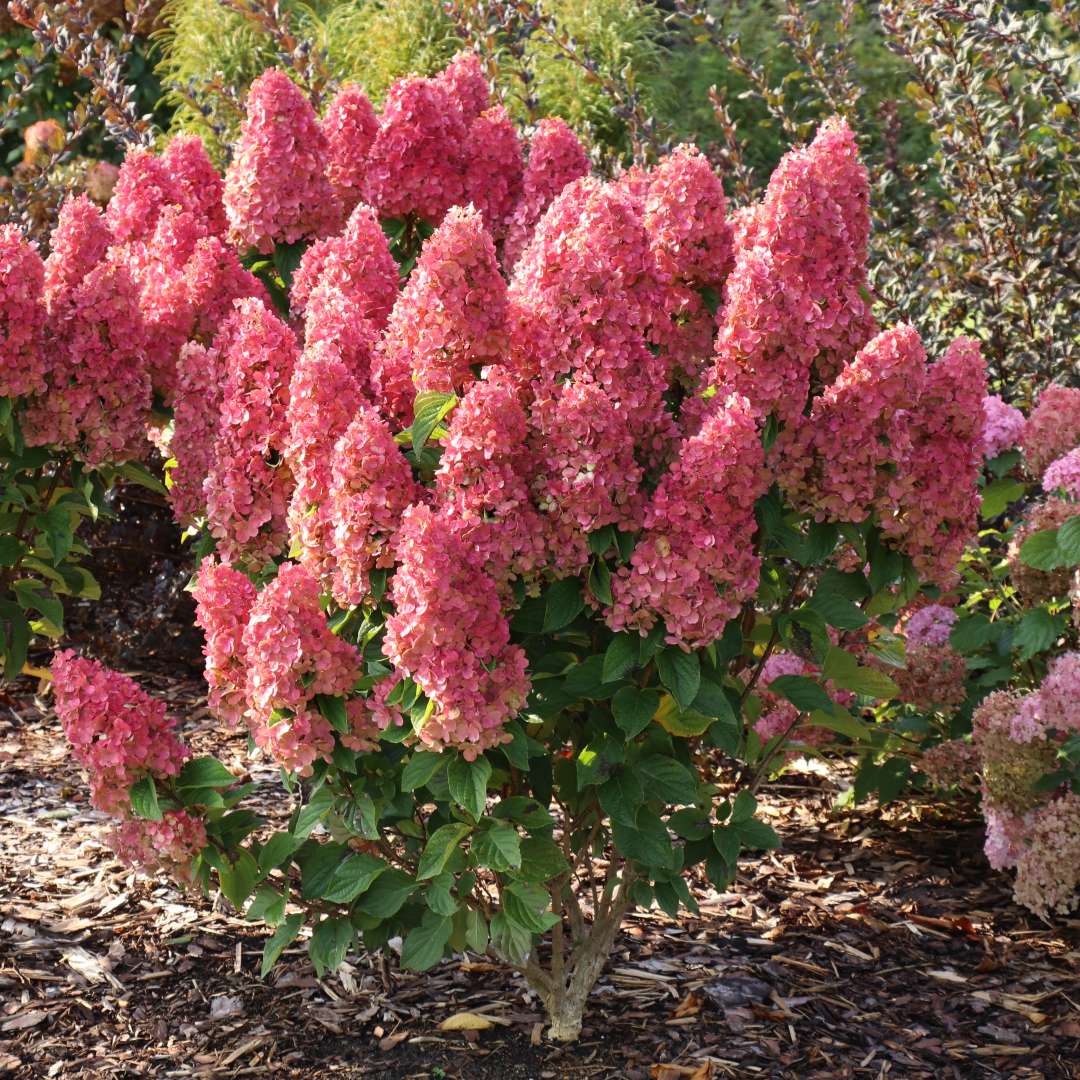
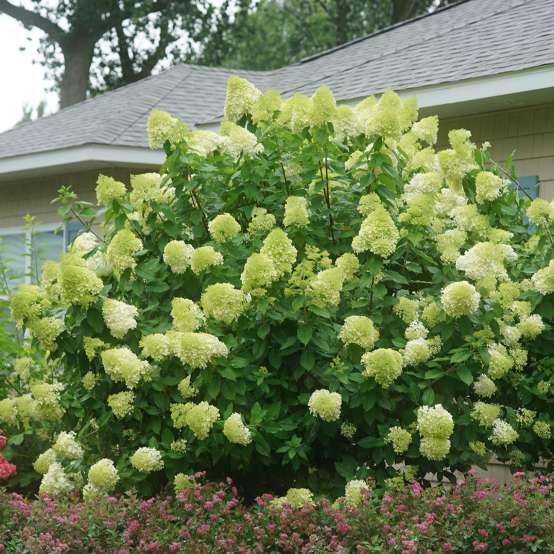
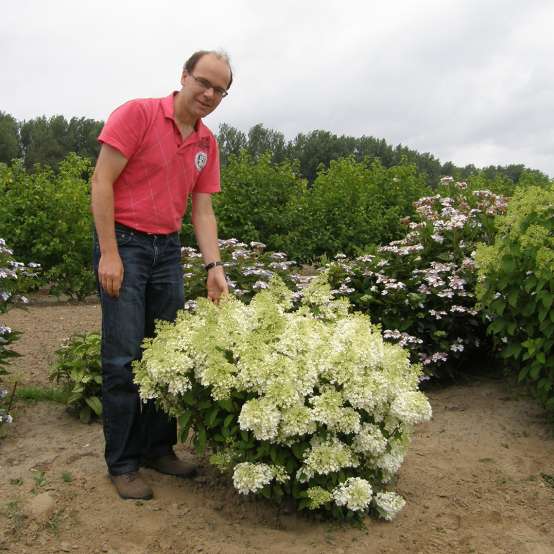
"WOW" is what visitors to our trials say when they see this plant. The flowers strike you first: the sheer quantity and the densely packed, very large inflorescences. Then you notice the foliage: deep, dark green, standing out from the stems. And those stems! Have you ever seen a panicle hydrangea with such a sturdy, distinctive habit? A single plant looks like a giant bouquet.
- USDA Zone
- 3 - 9 (-40°F/-40°C)
- Exposure
- Full sun, Part sun
- Height
- 3 - 5'
- Width
- 3 - 5'
- Type
- Deciduous
- Bloom Time
- Summer
- Flower Color
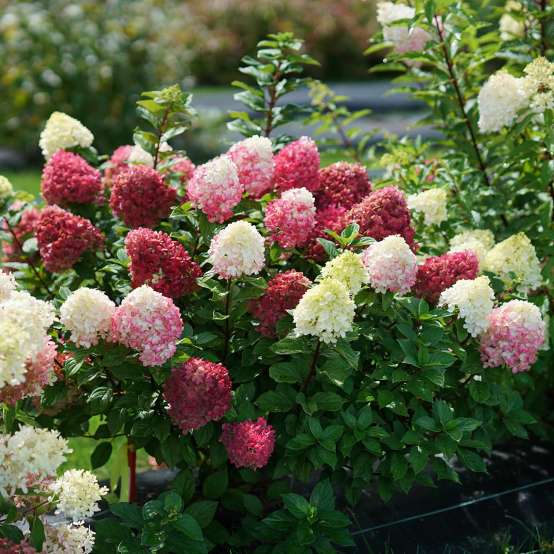
- Green, Pink, Red
- Foliage Color
- Green
General Care
Soil
Adaptable to most any soil except very wet or excessively alkaline soils.Pruning
In late winter or early spring, cut back by about one-third its total height, just above a set of large buds. This ensures that the growth for the season will come vigorous buds lower on the plant and also serves to remove any remaining dried blooms. Alternatively, cut back in autumn once the plant has gone completely dormant. May be cut back harder if desired, though this tends to produce stems that are unable to achieve maximum stem strength the following season.Uses
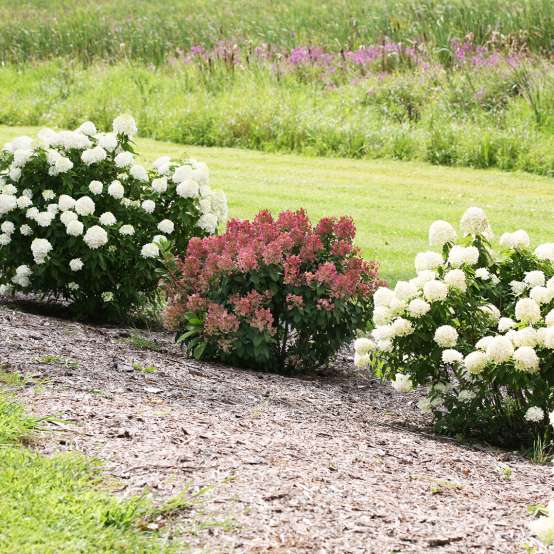
Specimen; mixed borders; mass plantings. Makes a good hedge or screen. Excellent for cut flowers, both fresh and dried.Growing Tips
Panicle hydrangeas are the most sun tolerant hydrangeas and are also resistant to wilting. In cooler climates, full sun is recommended for best stem strength and flower set. Flower color is unaffected by soil chemistry. If flowers turn brown and dry instead of aging to pink or red, this indicates that the plant needs more water or that nighttime temperatures are too high for the transition to occur.Features: New, Alkaline soil, Clay soil, Cut flower, Fall interest, Salt tolerant, Compact
Filters: Botanical genus: Hydrangea , Common name: Panicle Hydrangea, Retail program: Proven Winners® ColorChoice®, USDA Zone 3, USDA Zone 4, USDA Zone 5, USDA Zone 6, USDA Zone 7, USDA Zone 8, USDA Zone 9, Exposure: Full sun, Exposure: Part sun, Bloom time: Summer, Green flowers, Pink flowers, Red flowers, Green foliage

Features: New, Alkaline soil, Clay soil, Cut flower, Fall interest, Salt tolerant, Compact
Filters: Botanical genus: Hydrangea , Common name: Panicle Hydrangea, Retail program: Proven Winners® ColorChoice®, USDA Zone 3, USDA Zone 4, USDA Zone 5, USDA Zone 6, USDA Zone 7, USDA Zone 8, USDA Zone 9, Exposure: Full sun, Exposure: Part sun, Bloom time: Summer, Green flowers, Pink flowers, Red flowers, Green foliage